
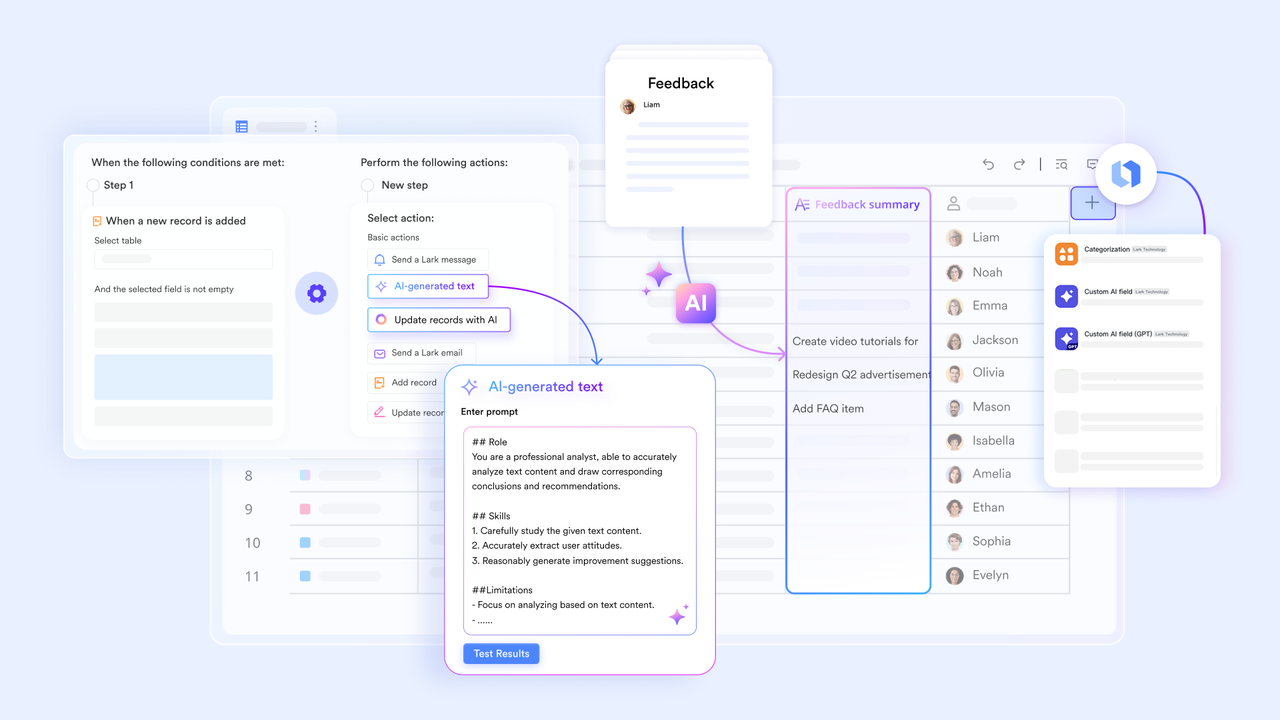
Strategy sessions produce plans. Plans produce slide decks. Slide decks produce alignment. And then, somewhere between the alignment and the actual work, the plan stops traveling. The team that was enthusiastic in the planning room finds itself two weeks later working from slightly different interpretations of what was agreed, with no shared operational layer connecting the strategy to the individual tasks that should be driving it. This is the last-mile problem in organizational execution, and it is the primary reason that organizations with genuinely good strategic thinking still produce mediocre operational outcomes. The gap is not between good ideas and bad ideas. It is between the place where the plan was made and the place where the work actually happens. Closing that gap requires project management tools that make the strategy visible at the task level, the task visible at the strategy level, and the distance between the two effectively zero.
Contents
- 1 Live projects, not frozen plans with Lark Base
- 2 Decisions that connect to commitments with Lark Docs
- 3 Approval gates that keep execution on course with Lark Approval
- 4 Execution signals that reach the team directly with Lark Messenger
- 5 Strategy that reaches the task level with Lark OKR
- 6 Bonus: Why execution gaps persist in well-planned organizations
- 7 Conclusion
Live projects, not frozen plans with Lark Base
A plan that lives in a slide deck is already outdated by the time the deck is distributed. The operational context changes, the team’s capacity shifts, and a dependency that was assumed to be resolved turns out to be still open. The slide deck does not update itself. The team keeps executing against a version of the plan that no longer reflects reality, and the gap between the plan and the work widens with every passing day.
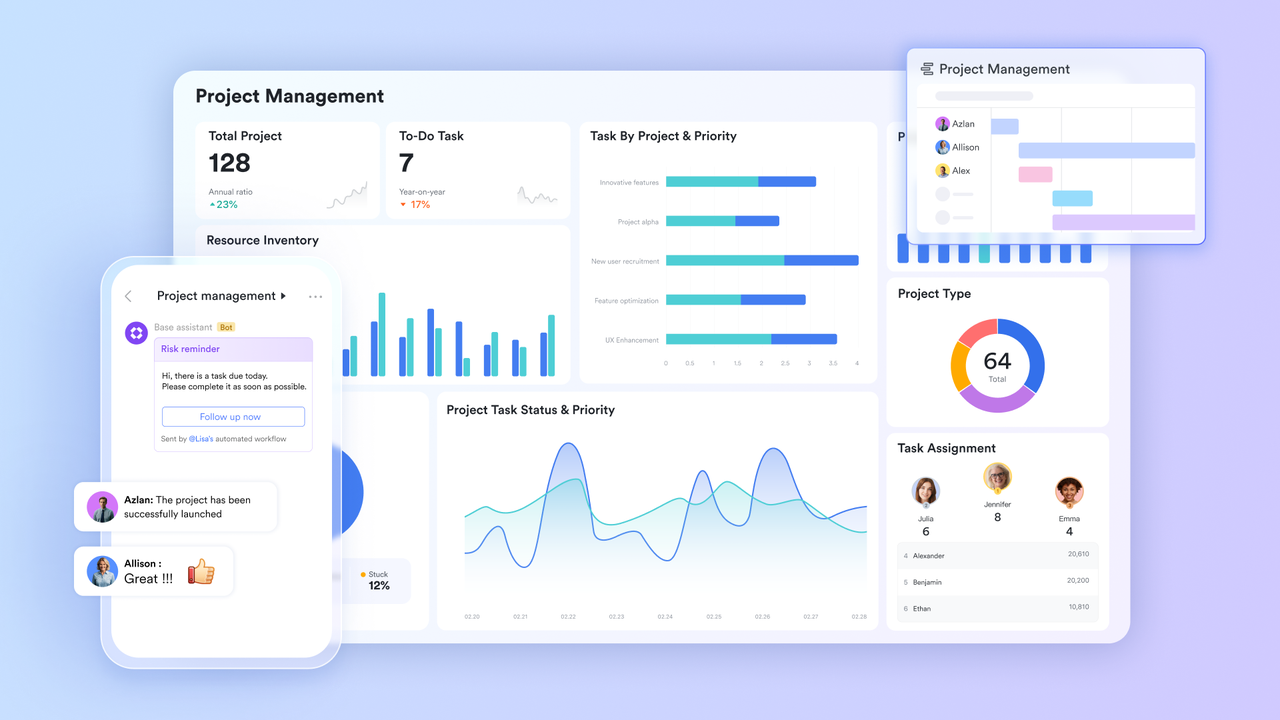
Lark Base closes that gap by making every project record a live operational object rather than a static entry in a tracker that someone updates when they remember to. Dropdown status fields reflect the current state of every task the moment it changes, and “automation workflows” trigger notifications to the right people when a record reaches a stage that requires their attention. Shared dashboards give every team member and every leader the same live picture of the plan’s current execution state without anyone having to compile, format, or distribute a report. The plan stays current because the operational system updates it continuously rather than relying on a weekly manual reconciliation.
Decisions that connect to commitments with Lark Docs
The most common execution failure is not a failure to work hard. It is a failure to work on the right things, and the root cause is almost always a decision that was not documented clearly enough to be acted on correctly. The team member who was in the planning meeting remembers the decision one way. The colleague who received the meeting summary remembers it another. Both are executing confidently against different versions of the same commitment.
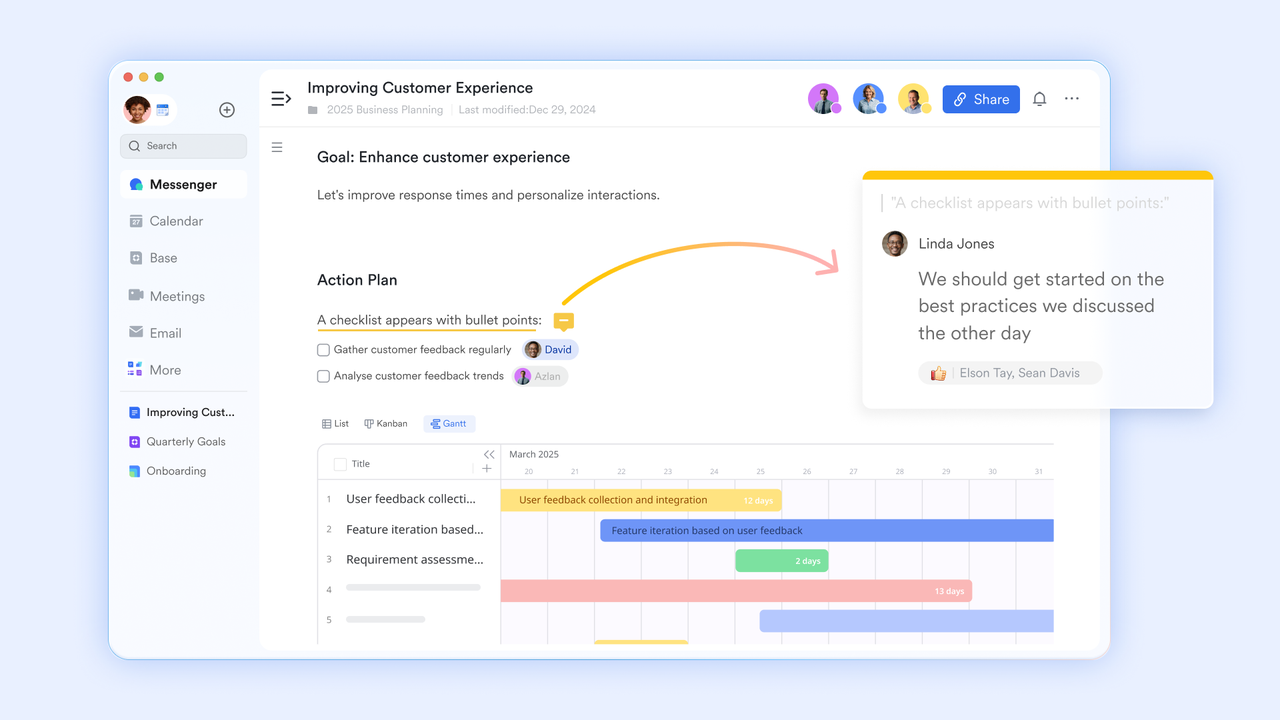
Lark Docs makes every planning decision a permanent, specific, and attributable record from the moment it is made. “Version History” logs every change with the editor’s name and timestamp, so the evolution of any commitment is traceable without anyone having to reconstruct it from memory. “@mention” within the planning document assigns specific execution responsibilities to named team members at the moment the decision is captured, so the commitment and the ownership are established simultaneously rather than requiring a separate task assignment step that may not happen until days later.
Approval gates that keep execution on course with Lark Approval
Execution fails at approval gates more often than at any other point in the operational cycle. A deliverable is ready. The approval sits in someone’s inbox. The team waits. The project timeline slips. By the time the approval comes through, the window it was meant to govern has already moved and the downstream work that depended on it has either been done speculatively or deferred entirely. Both outcomes cost more than a well-designed approval process would have prevented.
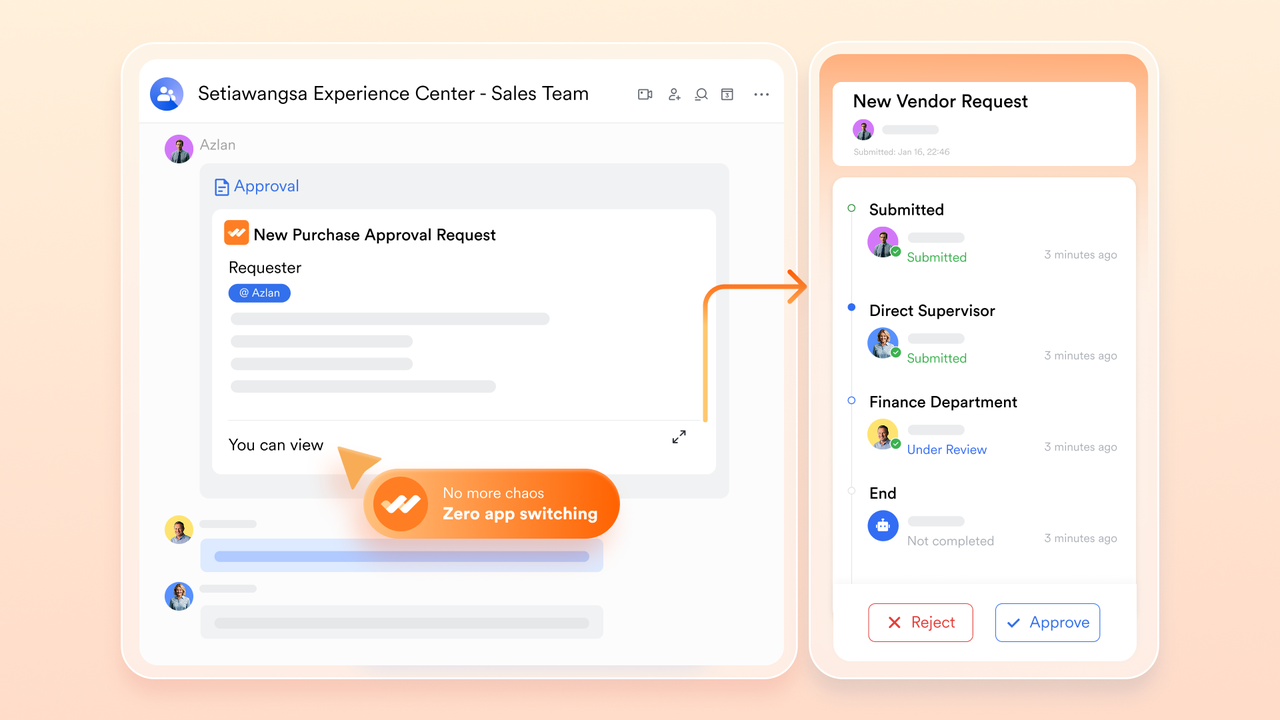
Lark Approval keeps execution moving by removing the passive waiting that serial approval chains create. “Parallel Routing” sends the approval to every required reviewer simultaneously, so the time cost is the pace of the slowest single reviewer rather than the sum of every reviewer waiting in sequence. “Conditional Branches” route the approval automatically based on its characteristics, so the right authority receives the right request without a coordinator having to manually direct it. “Approval Notifications” confirm the outcome to all relevant parties the moment a decision is made, so the execution team can proceed without checking a separate system to find out whether they have the green light.
Execution signals that reach the team directly with Lark Messenger
The last mile of execution is also the noisiest. The chat environment where the execution team coordinates contains everything from urgent blockers to casual conversation, and the signal that matters most is competing with the noise that matters least. The team member who needs to know that a dependency has been resolved cannot be certain their notification will surface before the cost of not knowing compounds into a real delay.
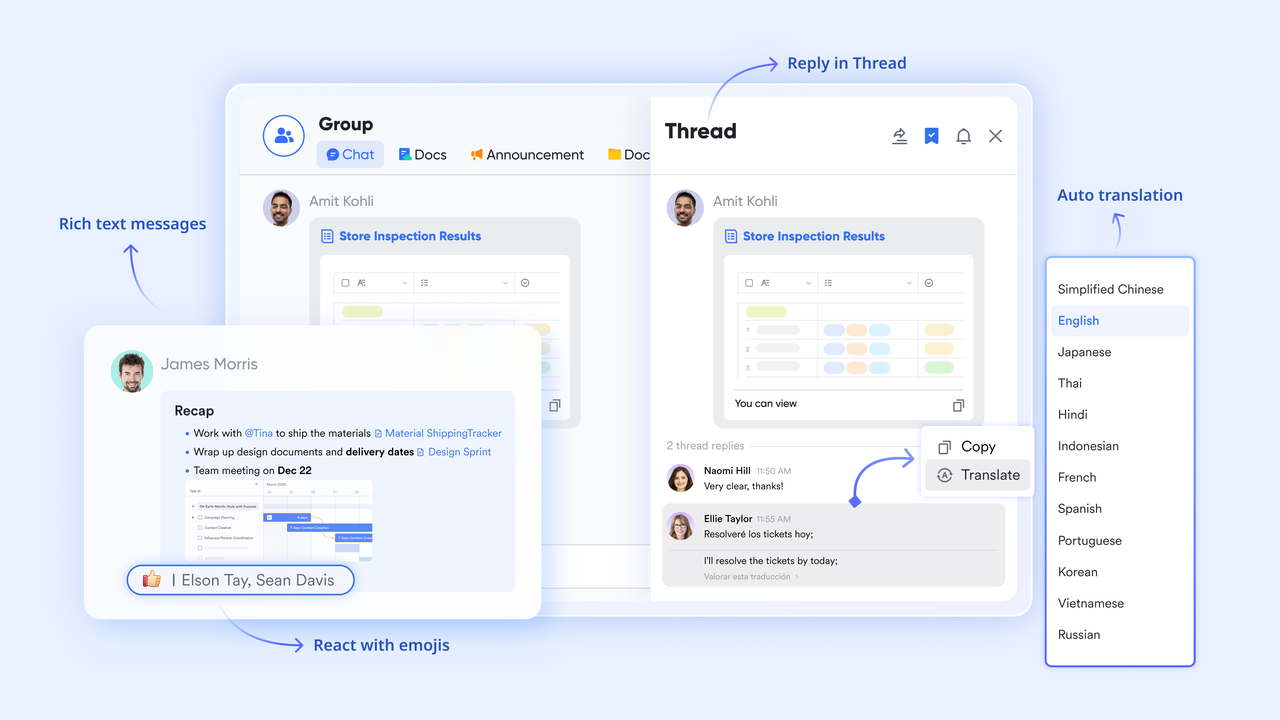
Lark Messenger gives execution teams the structural tools to separate signal from noise without going dark. “Chat Tabs & Threads” keep execution-specific conversations in named threads within the project group so that blocker messages, status updates, and dependency confirmations do not compete with general team communication for the same attention. Group folder organization with independent notification rules allows the team to configure which channels interrupt them and which accumulate quietly, so urgent execution signals reach their intended recipient without the team member having to monitor everything simultaneously.
Strategy that reaches the task level with Lark OKR
The execution gap is also a strategic visibility gap. The individual contributor who is executing a specific task often cannot see how that task connects to the company’s current priorities, and without that visibility they cannot make good judgment calls when an unexpected decision point arises. They either escalate everything, which taxes the manager, or they decide on their own without sufficient context, which risks misalignment.
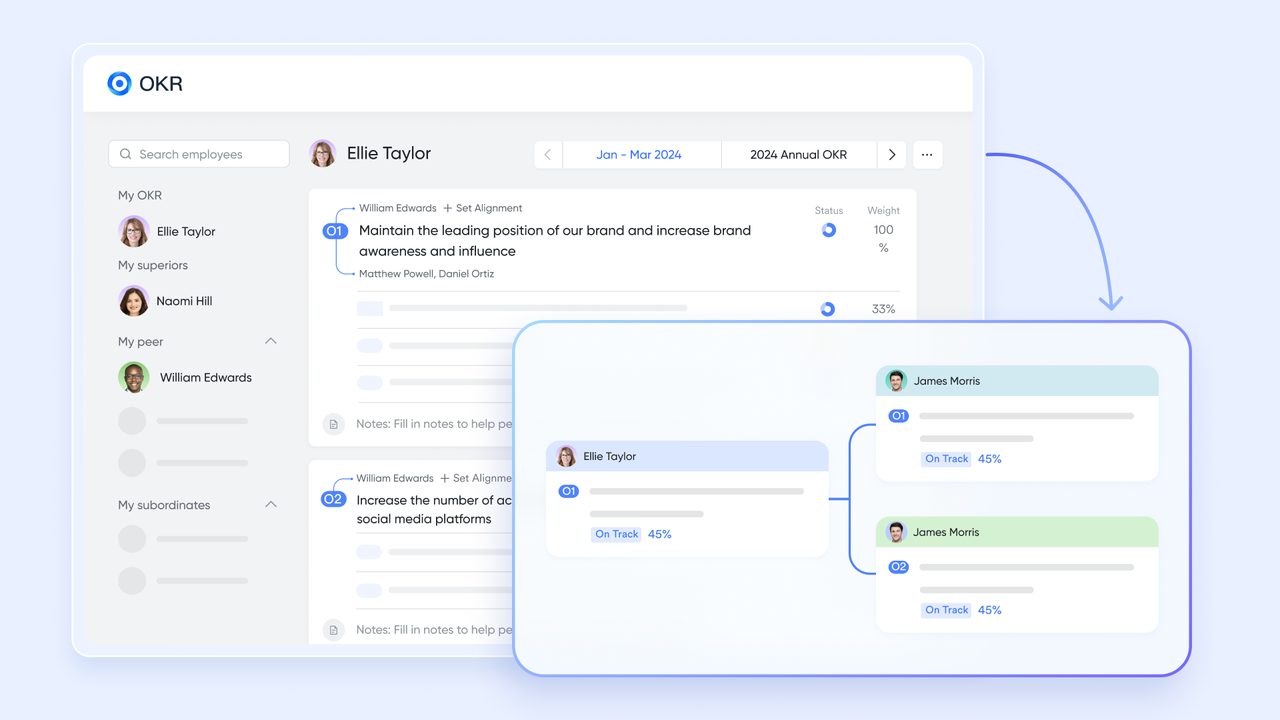
Lark OKR puts the strategic context at every team member’s fingertips without requiring a manager to relay it. Company objectives and connected key results are visible to the full organization at all times, so the engineer who hits an unexpected technical choice, or the marketing coordinator who is deciding between two approaches, can check the current strategic priorities before making a call. Individual key results link each person’s daily work directly to the team’s objectives, so the execution of individual tasks is anchored to the strategy rather than floating free of it.
Bonus: Why execution gaps persist in well-planned organizations
The execution gap is not a planning problem. Organizations that have invested in Asana, monday.com, or Notion for planning still experience execution failures because those tools address the plan layer without connecting it to the communication layer, the approval layer, or the strategic alignment layer. Each of those layers lives in a separate tool, and the friction at every boundary between them is where the last mile breaks down.
Looking at Google Workspace pricing as a foundation and adding a separate project tracker, a separate approval system, and a separate communication tool creates exactly the kind of disconnected execution environment where plans lose fidelity as they travel from the strategy session to the individual task. Lark keeps all five execution layers in one environment, so the last mile is not a gap. It is a continuous, connected path from strategy to outcome.
Conclusion
The last-mile problem is solved not by better planning but by better infrastructure. When the plan is live, decisions are documented, approvals are automatic, communication is structured, and strategic context is always visible, the distance between where a plan is made and where it is executed collapses to nothing. A connected set of productivity tools that treats execution as a structural outcome rather than a behavioral aspiration is how organizations finally close the gap between their best thinking and their actual results.

