
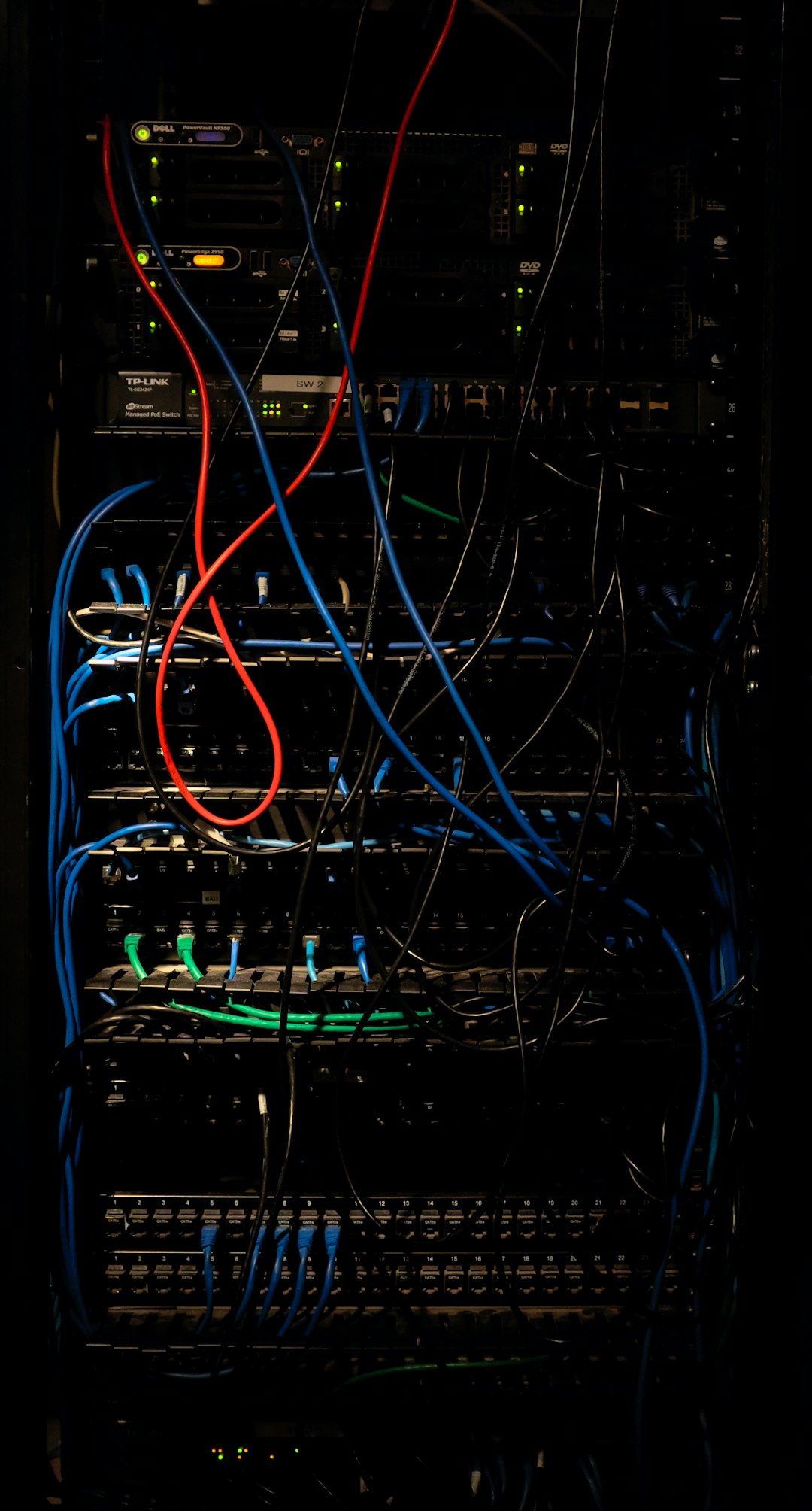
Government services increasingly depend on secure, reliable, and fast digital infrastructure. From issuing licenses and processing benefits to coordinating emergency response and managing public health data, agencies need to exchange information across cities, counties, schools, courts, and field offices. A State-Wide Area Network provides the shared backbone that makes this coordination possible, giving government organizations a consistent platform for communication, data transfer, and service delivery.
TLDR: A State-Wide Area Network helps government agencies deliver services more efficiently, securely, and consistently across an entire state. It reduces duplicated infrastructure, improves coordination between departments, and supports better access for rural and underserved communities. By creating a common digital foundation, it strengthens emergency response, cybersecurity, cost control, and long-term modernization.
Contents
- 1 What a State-Wide Area Network Means for Public Service
- 2 Improved Coordination Across Agencies
- 3 Greater Efficiency and Lower Long-Term Costs
- 4 Stronger Cybersecurity and Risk Management
- 5 Better Service Access for Rural and Underserved Areas
- 6 Support for Digital Transformation
- 7 Improved Emergency Response and Continuity
- 8 Data Quality, Transparency, and Accountability
- 9 Standardization Without Eliminating Local Flexibility
- 10 Key Requirements for Success
- 11 A Foundation for Modern Government
What a State-Wide Area Network Means for Public Service
A State-Wide Area Network, often called a SWAN, is a high-capacity communications network that connects government offices, public institutions, and authorized service locations across a state. It may link state agencies, district offices, local government facilities, hospitals, schools, police stations, data centers, and public service counters. Instead of each department building separate connectivity arrangements, the state uses a unified network architecture with defined standards for performance, security, monitoring, and access.
The value of this approach is not only technical. A well-planned network becomes a public service enabler. It supports faster transactions, more dependable communication, and better access to information where it is needed. In practical terms, it helps public employees serve residents with fewer delays, fewer manual processes, and fewer disconnected systems.

Improved Coordination Across Agencies
Government work often crosses organizational boundaries. A public health department may need information from local clinics. A welfare office may need identity records from another agency. Emergency responders may require real-time updates from transportation, weather, and law enforcement systems. Without a shared network, these interactions can depend on fragmented systems, inconsistent connectivity, or slow manual exchanges.
A State-Wide Area Network creates a common communications layer that allows authorized agencies to exchange data more reliably. This makes interdepartmental coordination more practical and reduces the time spent reconciling information from isolated platforms. When agencies can connect through a trusted infrastructure, they are better positioned to collaborate on complex public needs.
- Faster information sharing between departments and regional offices.
- Improved case management for services that involve multiple agencies.
- Consistent access to applications across urban and rural locations.
- Reduced dependency on paper-based or manually transferred records.
Greater Efficiency and Lower Long-Term Costs
One of the clearest benefits of a State-Wide Area Network is the ability to reduce duplication. When every agency procures its own network services, the state may end up paying for overlapping contracts, incompatible systems, and separate maintenance arrangements. This fragmentation increases administrative overhead and can make it difficult to enforce statewide standards.
A shared network allows the government to aggregate demand, negotiate more effectively, and standardize technical requirements. While building or upgrading such a network requires careful investment, the long-term financial benefits can be substantial. Centralized planning can reduce redundant circuits, simplify procurement, and improve the use of data centers and cloud services.
Efficiency also comes from operational consistency. With a single framework for connectivity, agencies can adopt common service levels, monitoring standards, and escalation procedures. This improves accountability and makes it easier to identify problems before they become service failures.
Stronger Cybersecurity and Risk Management
Public sector networks carry sensitive information, including identity records, tax data, health information, legal documents, and critical infrastructure details. A fragmented network environment can create uneven security practices, with some agencies using modern protections while others rely on outdated systems. A State-Wide Area Network helps address this gap by applying consistent security controls across connected entities.
These controls may include centralized monitoring, secure authentication, encryption, controlled access, intrusion detection, and defined incident response procedures. A statewide security operations model can identify suspicious activity across agencies rather than treating each office as an isolated environment. This broader visibility is especially important as cyber threats become more sophisticated and target public institutions at every level.
A SWAN also makes it easier to enforce compliance with legal and regulatory requirements. Policies for data protection, audit logging, access control, and continuity planning can be embedded into the infrastructure. This does not eliminate the responsibility of individual agencies, but it gives them a stronger and more consistent foundation.
Better Service Access for Rural and Underserved Areas
Public services must reach residents regardless of geography. In many states, rural offices, remote schools, health centers, agricultural service points, and local administrative units struggle with unreliable or limited connectivity. This can result in delayed applications, poor access to digital records, and fewer options for residents who cannot easily travel to larger cities.
A State-Wide Area Network can help close this gap by extending reliable connectivity to areas that might otherwise be left behind. When local offices are connected to the same digital backbone as central departments, residents can receive more complete services closer to where they live. This is particularly important for benefits enrollment, telehealth, remote education support, land records, licensing, and citizen grievance systems.
Equitable access is not simply a technology objective; it is a governance objective. A state that invests in shared connectivity improves the likelihood that public services are available on fair and consistent terms. This strengthens trust, especially in communities that have historically experienced slower access to government support.
Support for Digital Transformation
Digital transformation in government depends on more than launching websites or mobile applications. Behind every digital service is a chain of systems that must communicate reliably. Identity verification, payment processing, document management, appointment scheduling, geospatial information, and case tracking all depend on stable connectivity.
A State-Wide Area Network gives agencies a platform for modernizing services in a coordinated way. It supports the use of shared applications, cloud platforms, centralized databases, and secure data exchanges. It also enables real-time dashboards that help leaders monitor service performance, resource use, and public outcomes.
The network can support several modernization priorities:
- Online citizen services, including permits, registrations, certificates, and benefit applications.
- Integrated databases that reduce repeated data entry and improve record accuracy.
- Video conferencing and remote consultations for administrative hearings, health services, and training.
- Cloud adoption through secure and managed connectivity to approved platforms.
- Data analytics for planning, budgeting, and policy evaluation.
Improved Emergency Response and Continuity
During emergencies, communication failures can have serious consequences. Natural disasters, public health crises, civil emergencies, and infrastructure disruptions require rapid coordination among government departments and field teams. A State-Wide Area Network can improve resilience by providing dependable communication paths and supporting backup connectivity for essential services.
For example, emergency operations centers can use the network to coordinate with police, fire, transport, health, utilities, and local administrators. Real-time data can be shared across command centers, helping officials understand conditions on the ground and allocate resources more effectively. Systems for alerts, logistics, shelter management, medical capacity, and road closures can operate on a common infrastructure.
Continuity planning is also strengthened. If a local office is damaged or disconnected, services can often be rerouted through another location or delivered through centralized systems. A resilient network architecture, supported by redundancy and disaster recovery planning, helps government continue functioning when residents need it most.
Data Quality, Transparency, and Accountability
Reliable connectivity improves the quality of government data. When offices operate on slow or disconnected systems, records may be duplicated, delayed, or entered inconsistently. A State-Wide Area Network supports timely access to authoritative data sources, reducing the risk of conflicting information across departments.
Better data also supports better accountability. Leaders can track service delivery metrics, identify bottlenecks, and compare performance across regions. This does not mean exposing private information; rather, it means using properly governed data to understand whether services are reaching citizens effectively. With appropriate safeguards, aggregated information can also support public dashboards, legislative oversight, and informed budgeting.
Transparency improves when systems produce reliable records of decisions, transactions, and service timelines. Citizens benefit when they can check application status, receive timely notifications, and understand what steps remain. Public employees benefit as well, because clear workflows reduce confusion and help resolve issues faster.
Standardization Without Eliminating Local Flexibility
A common concern is that statewide infrastructure may impose too much central control. In practice, a well-designed SWAN can balance standardization with local flexibility. The state can define core standards for security, reliability, interoperability, and service levels while allowing departments and local bodies to choose applications that meet their operational needs.
This approach is particularly useful in large states with diverse regions. Urban agencies may require high-volume transaction systems, while rural offices may need dependable access for smaller teams. A shared network can support both, as long as it is planned with scalable capacity and clear governance.
Key Requirements for Success
The benefits of a State-Wide Area Network are strongest when the project is treated as a long-term public infrastructure initiative, not merely an information technology purchase. Strong governance, sustainable funding, and disciplined implementation are essential.
- Clear governance: Roles and responsibilities should be defined for state agencies, local bodies, vendors, and oversight authorities.
- Security by design: Cybersecurity should be built into architecture, procurement, operations, and staff training.
- Service level agreements: Performance, uptime, support response, and maintenance standards must be measurable.
- Scalable architecture: The network should support future growth in users, applications, and data volume.
- Inclusive rollout: Rural and underserved areas should be prioritized, not treated as late-stage additions.
- Interoperability standards: Systems should be able to exchange data securely without locking agencies into narrow, incompatible tools.
A Foundation for Modern Government
A State-Wide Area Network is not a complete solution by itself. It must be supported by sound policy, skilled personnel, secure applications, responsible data governance, and sustained leadership. However, without strong connectivity, many modernization efforts remain limited or uneven. The network is the foundation on which reliable digital government can be built.
For citizens, the benefits appear as faster services, fewer repeated visits, better access in remote areas, and more responsive public institutions. For government employees, the benefits include better tools, clearer communication, and more dependable systems. For policymakers, the network provides a strategic asset that supports efficiency, resilience, security, and evidence-based decision-making.
In a period when public expectations are rising and digital risks are increasing, investing in a State-Wide Area Network is a serious step toward more capable governance. It strengthens the state’s ability to serve all residents, coordinate across institutions, and adapt to future demands. Done properly, it is not just a technology project; it is a long-term commitment to effective, secure, and inclusive public service.

