
Edge AI deployment platforms are transforming how intelligent applications are built and delivered by enabling developers to train, optimize, and deploy machine learning models directly on hardware devices. Instead of relying on cloud processing, these platforms allow models to run locally on microcontrollers, smartphones, gateways, and embedded systems. Among the most recognized solutions in this space is Edge Impulse, but it is part of a broader ecosystem of tools designed to simplify edge AI development.
TLDR: Edge AI deployment platforms like Edge Impulse make it easier to build, train, test, and deploy machine learning models directly onto devices such as microcontrollers and embedded systems. They streamline data collection, feature engineering, model optimization, and hardware integration in one workflow. These platforms help reduce latency, improve privacy, and lower bandwidth costs by processing data locally. As demand for intelligent IoT and smart devices grows, edge AI platforms are becoming essential tools for developers and businesses.
Contents
- 1 What Is Edge AI?
- 2 The Role of Edge AI Deployment Platforms
- 3 Edge Impulse: A Leading Example
- 4 Other Popular Edge AI Deployment Platforms
- 5 Why Businesses Are Adopting Edge AI Platforms
- 6 The Development Workflow on Edge AI Platforms
- 7 Challenges in Edge AI Deployment
- 8 The Future of Edge AI Deployment Platforms
- 9 FAQ
- 9.1 1. What is the main advantage of using platforms like Edge Impulse?
- 9.2 2. Can edge AI models run without internet connectivity?
- 9.3 3. Are edge AI platforms only for experts?
- 9.4 4. What types of applications benefit most from edge AI?
- 9.5 5. How is edge AI different from cloud AI?
- 9.6 6. Does edge AI replace cloud AI?
What Is Edge AI?
Edge AI refers to the deployment of artificial intelligence algorithms directly on hardware devices at the “edge” of the network, rather than in centralized cloud servers. These devices may include:
- Microcontrollers (MCUs)
- Single-board computers
- Smart cameras
- Industrial sensors
- Wearable devices
- IoT gateways
By running inference locally, edge AI systems reduce latency, enhance privacy, and improve reliability in environments with limited connectivity.
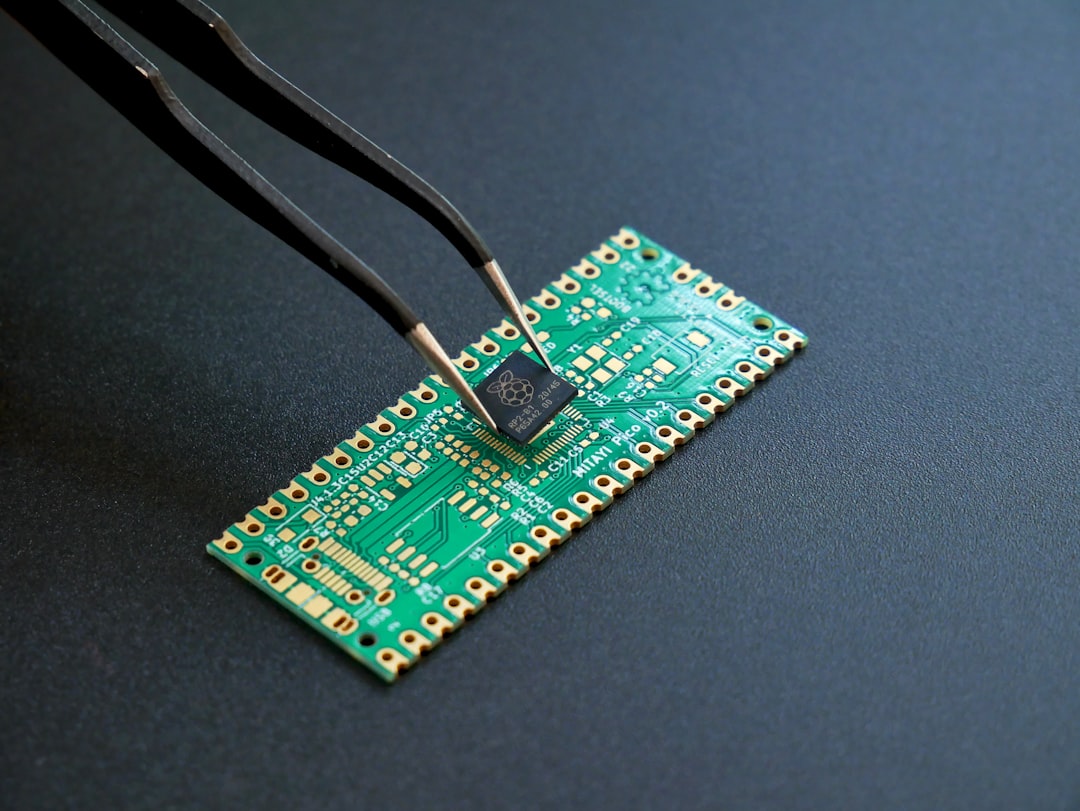
The key challenge, however, is that edge devices often have limited memory, processing power, and battery capacity. This constraint makes traditional machine learning workflows impractical without specialized optimization tools. That is where edge AI deployment platforms come into play.
The Role of Edge AI Deployment Platforms
Edge AI platforms provide an integrated environment that simplifies the process of:
- Collecting and labeling data
- Designing ML pipelines
- Training models
- Optimizing for hardware constraints
- Testing and validating performance
- Deploying firmware-ready models
Without such platforms, developers would need to manually assemble toolchains using separate frameworks for data processing, model training, quantization, and hardware compilation. These tasks require significant expertise in embedded systems and machine learning. Platforms like Edge Impulse abstract this complexity.
Edge Impulse: A Leading Example
Edge Impulse is one of the most well-known edge AI development platforms. It offers a cloud-based studio combined with device-side agents that enable seamless integration with development boards and sensors.
Key Features of Edge Impulse
- Data acquisition from connected devices
- Visual signal processing pipelines
- AutoML capabilities
- Model optimization and quantization
- One-click deployment to multiple hardware targets
- C++ firmware libraries for embedded integration
Its visual workflow makes it accessible to engineers who may not specialize in deep learning. Users can drag and drop processing blocks, define features, and test models directly against live sensor data.

Edge Impulse supports use cases such as:
- Predictive maintenance
- Keyword spotting
- Anomaly detection
- Computer vision on microcontrollers
- Gesture recognition
By generating optimized C++ code, it allows models to run on devices with extremely constrained memory footprints.
Other Popular Edge AI Deployment Platforms
While Edge Impulse stands out for usability, several other platforms provide powerful edge AI capabilities. Below is a comparison of prominent tools in this space.
| Platform | Primary Focus | Hardware Support | Ease of Use | Best For |
|---|---|---|---|---|
| Edge Impulse | End to end TinyML development | MCUs, sensors, embedded boards | High | Rapid prototyping and production deployment |
| TensorFlow Lite Micro | Lightweight inference engine | Microcontrollers | Moderate | Developers comfortable with manual workflows |
| NVIDIA Jetson Platform | Edge GPU acceleration | Jetson devices | Moderate | Computer vision and robotics |
| AWS IoT Greengrass | Edge cloud integration | IoT devices, gateways | Moderate | Cloud connected edge deployment |
| Azure IoT Edge | Container based edge AI | Industrial devices | Moderate | Enterprise scale IoT systems |
TensorFlow Lite Micro
This framework is designed for running TensorFlow models on microcontrollers. Unlike Edge Impulse, it does not provide a full visual pipeline or integrated data collection tools. It is ideal for developers who want complete control over model architecture and deployment.
NVIDIA Jetson Platform
The Jetson series enables AI at the edge with GPU acceleration. It is more powerful than microcontroller-based solutions and supports advanced computer vision and robotics applications.
AWS IoT Greengrass and Azure IoT Edge
These platforms focus on integrating cloud-managed workloads with edge devices. They are often used in industrial environments where centralized management and orchestration are essential.
Why Businesses Are Adopting Edge AI Platforms
Organizations are increasingly deploying AI at the edge due to several compelling benefits:
- Reduced latency: Real-time decision-making without cloud delays.
- Improved privacy: Sensitive data remains on-device.
- Lower bandwidth costs: Only relevant insights are transmitted.
- Enhanced reliability: Systems function without constant connectivity.
- Energy efficiency: Optimized models use minimal power.
Industries such as manufacturing, healthcare, agriculture, and consumer electronics are implementing edge AI for smarter automation and monitoring systems.
Image not found in postmetaThe Development Workflow on Edge AI Platforms
Although specific tools vary, the typical workflow includes:
1. Data Collection
Data is gathered from sensors or devices in real-world conditions. Quality labeled data is critical for model performance.
2. Signal Processing and Feature Engineering
Raw data is transformed into meaningful features suitable for machine learning algorithms.
3. Model Training
Algorithms are trained using classification, regression, or anomaly detection techniques.
4. Model Optimization
Techniques such as quantization and pruning reduce memory usage and computation requirements.
5. Deployment
The final model is converted into firmware or a container optimized for the target hardware.
6. Monitoring and Updates
Devices can be updated with improved models as new data becomes available.
Challenges in Edge AI Deployment
Despite their advantages, edge AI systems present certain challenges:
- Hardware fragmentation: Wide variety of chip architectures.
- Resource constraints: Limited RAM and CPU power.
- Security risks: Edge devices may be physically accessible.
- Model debugging complexity: Harder to troubleshoot than cloud models.
Edge AI deployment platforms mitigate these challenges by providing standardized workflows and hardware-specific optimizations.
The Future of Edge AI Deployment Platforms
As TinyML and IoT continue to expand, edge AI platforms are expected to become more automated and intelligent. Emerging trends include:
- Automated model architecture search
- Cross-platform compatibility improvements
- Enhanced low-code interfaces
- Integrated device lifecycle management
Additionally, semiconductor advancements are producing AI-optimized chips specifically designed for edge inference. This synergy between hardware and software platforms will further accelerate adoption.
In the coming years, it is likely that building AI-powered devices will become as approachable as developing mobile applications today, largely thanks to platforms that simplify deployment and optimization.
FAQ
1. What is the main advantage of using platforms like Edge Impulse?
The primary advantage is streamlined development. These platforms integrate data collection, model training, optimization, and deployment into a single environment, reducing complexity and development time.
2. Can edge AI models run without internet connectivity?
Yes. Edge AI models perform inference locally, meaning devices can operate independently without continuous cloud access.
3. Are edge AI platforms only for experts?
No. Many platforms, especially Edge Impulse, are designed with user-friendly interfaces that enable engineers and developers without deep AI expertise to build functional models.
4. What types of applications benefit most from edge AI?
Applications requiring real-time decision-making, such as predictive maintenance, smart surveillance, wearable health devices, and industrial automation, benefit significantly.
5. How is edge AI different from cloud AI?
Cloud AI processes data in centralized servers, often requiring internet connectivity. Edge AI processes data locally on devices, reducing latency and improving privacy.
6. Does edge AI replace cloud AI?
Not entirely. In many systems, edge AI handles immediate inference while cloud AI manages large-scale analytics, retraining, and fleet coordination.
Edge AI deployment platforms are reshaping the development of intelligent devices by lowering technical barriers and accelerating innovation. As tools like Edge Impulse continue to mature, they are enabling a new generation of smart, responsive, and privacy-conscious embedded systems that operate efficiently at the edge of the network.

