
Manufacturers in 2026 face tighter margins, shorter product life cycles, and higher expectations for speed than ever before. Yet many companies still choose between CNC machining, casting, and metal 3D printing based primarily on unit price quotes. That narrow approach often leads to hidden iterations, tooling missteps, and rework cycles that quietly waste up to 30% of a prototyping budget. A more strategic, framework-driven decision process is essential to prevent that loss and accelerate time to market.
TL;DR: Choosing between CNC, casting, and metal 3D printing based on quotes alone leads to costly prototyping waste. A 2026-ready framework evaluates geometry, quantity, material performance, tooling investment, lead time, and lifecycle flexibility before selecting a process. CNC excels in precision and mid-volume runs, casting shines at scale, and metal 3D printing dominates in complexity and rapid iteration. Applying structured decision criteria can reduce prototyping waste by up to 30% while improving product-market speed.
Below is a practical framework that engineering and procurement teams can use to move “beyond the quote” and make data-backed production decisions.
Contents
- 1 Why Quote-Driven Decisions Fail
- 2 A 6-Factor Framework for Process Selection
- 3 Comparison Chart: CNC vs Casting vs Metal 3D Printing
- 4 Hidden Drivers of 30% Waste
- 5 A Practical Decision Flow (2026 Edition)
- 6 When Hybrid Manufacturing Prevents Waste
- 7 Industry Trends Shaping 2026 Decisions
- 8 Conclusion
- 9 Frequently Asked Questions (FAQ)
- 9.1 1. Is metal 3D printing always more expensive than CNC?
- 9.2 2. At what volume does casting become more cost-effective?
- 9.3 3. Can companies combine CNC and metal 3D printing?
- 9.4 4. How does complexity affect process choice?
- 9.5 5. What is the biggest cause of prototyping budget waste?
- 9.6 6. Is metal 3D printing suitable for end-use production?
- 9.7 7. How can teams avoid 30% waste in 2026?
Why Quote-Driven Decisions Fail
At first glance, selecting the lowest quote seems financially responsible. However, quotes typically reflect:
- Per-unit production cost
- Setup or tooling cost
- Estimated lead time
They rarely incorporate:
- Iteration frequency during prototyping
- Probability of design changes
- Functional performance testing cycles
- Supply chain volatility
- Lifecycle production scaling
When these overlooked factors accumulate, budget overruns follow. In 2026, volatile material costs and compressed launch windows amplify this risk. Organizations therefore need a multidimensional framework.
A 6-Factor Framework for Process Selection
1. Geometry Complexity
Geometry complexity is often the most decisive factor.
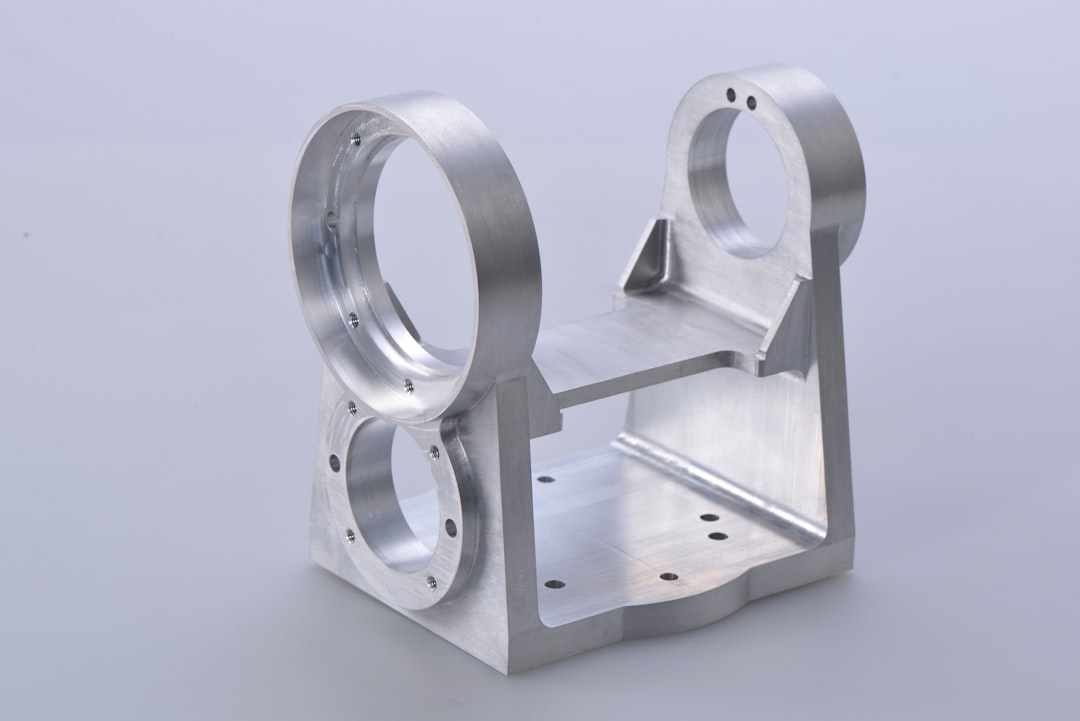
- Low complexity: Prismatic parts, open access features → CNC excels.
- Moderate complexity: Organic curves, internal cavities → Casting or 5-axis CNC.
- High complexity: Lattices, internal channels, topology-optimized shapes → Metal 3D printing.
If a design includes internal cooling channels or consolidated assemblies, forcing it into CNC or casting may require redesign compromises that weaken performance. Metal additive manufacturing (AM) eliminates those constraints.
2. Production Volume
Volume dramatically shifts cost curves:
- 1–50 units: Metal 3D printing or CNC (no tooling required).
- 50–10,000 units: CNC or low-volume casting.
- 10,000+ units: Casting becomes significantly more cost-efficient.
One common error is investing in casting tooling before validating the design. If iteration is still likely, tooling costs may be written off after only a few engineering changes.
3. Tooling Investment Risk
Casting requires upfront mold or die tooling. In early-stage development, this creates financial risk.
- High iteration probability? Avoid heavy tooling.
- Design frozen and validated? Tooling becomes strategic.
In 2026, agile product teams increasingly delay hard tooling until digital validation and field testing reduce uncertainty.
4. Lead Time & Time-to-Market
Speed now directly correlates with competitiveness.
- Metal 3D printing: Days to weeks.
- CNC: 1–3 weeks typical.
- Casting with tooling: 6–12+ weeks initial cycle.
If market entry speed delivers strategic advantage, additive manufacturing may offset higher per-unit cost.
5. Material & Mechanical Requirements
Each process supports different material behaviors:
- CNC: Broad alloy access, predictable properties.
- Casting: Excellent for aluminum and certain steels in bulk production.
- Metal 3D printing: Advanced alloys, lightweight optimization, but possible anisotropy depending on process.
Critical load-bearing aerospace parts may justify additive for weight reduction, while simple brackets may not.
6. Lifecycle Scalability
Perhaps the most overlooked factor is scalability.
- Will the product scale from 100 units to 100,000?
- Will customization remain important?
- Will geopolitical shifts affect supply chains?
Metal 3D printing enables distributed production. Casting centralizes economies of scale. CNC offers flexibility in between.
Comparison Chart: CNC vs Casting vs Metal 3D Printing
| Factor | CNC Machining | Casting | Metal 3D Printing |
|---|---|---|---|
| Upfront Tooling Cost | Low | High | None |
| Per Unit Cost (Low Volume) | Moderate | High | Moderate to High |
| Per Unit Cost (High Volume) | Higher | Low | High |
| Design Complexity | Medium | Medium | Very High |
| Lead Time | Short | Long Initial | Very Short |
| Ideal Use Case | Functional prototypes, mid volumes | Mass production | Rapid iteration, complex lightweight parts |
Hidden Drivers of 30% Waste
Prototyping waste typically results from three systemic behaviors:
1. Early Tooling Commitment
Companies eager to reduce per-unit cost prematurely invest in molds. Subsequent design changes result in tooling rework.
2. Underestimating Complexity
Trying to machine or cast designs better suited for additive often leads to assembly-heavy redesigns.
3. Ignoring Iteration Velocity
If five design cycles are expected, the fastest iteration method usually wins financially—even if its per-part price is higher.
A Practical Decision Flow (2026 Edition)
- Validate geometry complexity. If highly complex → evaluate metal 3D printing first.
- Estimate realistic iteration cycles. More than 3? Avoid casting tooling.
- Model total lifecycle volume. Above 10,000 annually? Prepare casting transition plan.
- Quantify speed value. Delayed launch cost vs rapid validation benefit.
- Plan hybrid production. Prototype in additive → bridge with CNC → scale with casting.
This hybrid pathway has become common across aerospace, automotive EV programs, and advanced consumer electronics.
When Hybrid Manufacturing Prevents Waste
In 2026, the most cost-efficient teams rarely choose just one process. Instead, they sequence them strategically:
- Phase 1: Metal 3D print for geometry freedom.
- Phase 2: CNC for functional validation with production-grade alloys.
- Phase 3: Transition to casting when volumes justify tooling.
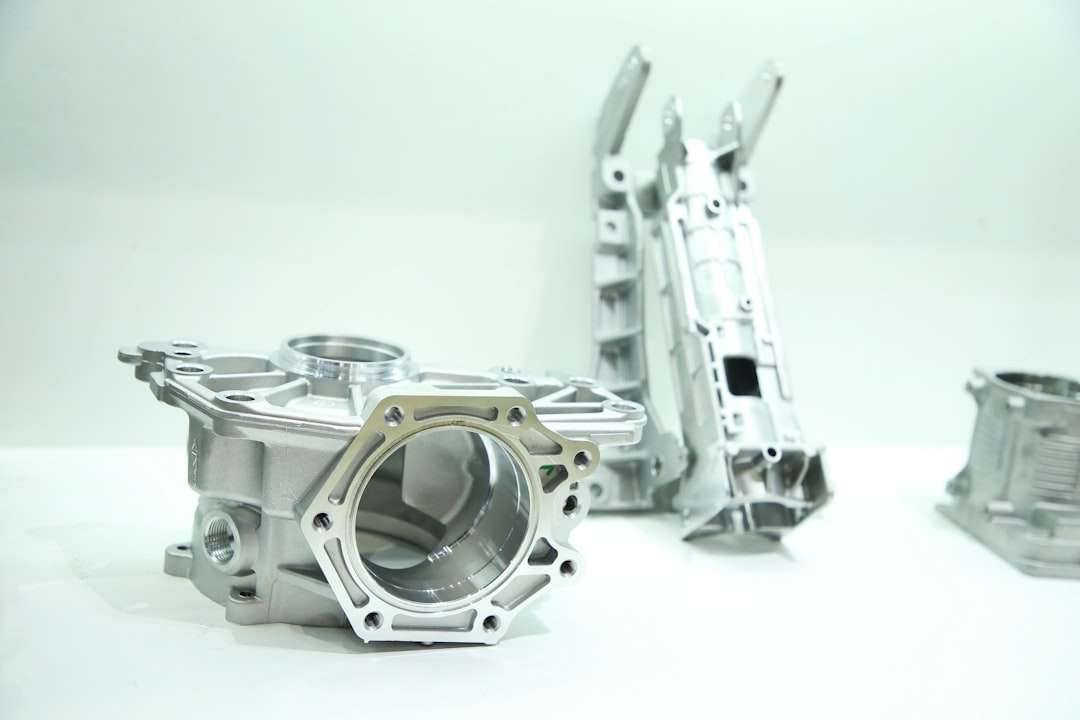
This staged approach limits sunk tooling costs while preserving scale economics.
Industry Trends Shaping 2026 Decisions
- Localized manufacturing: Reduces geopolitical supply chain risk.
- Advanced simulation tools: Enable print-optimized geometries.
- Sustainability pressures: Additive minimizes waste material.
- AI-driven cost modeling: Predicts scalability inflection points.
Teams integrating these tools reduce budget waste by aligning manufacturing choice with strategic growth stages rather than static price comparison.
Conclusion
Choosing between CNC, casting, and metal 3D printing in 2026 requires more than comparing line-item quotes. True cost efficiency emerges when geometry complexity, volume forecasts, tooling risk, iteration velocity, material performance, and lifecycle scalability are analyzed together. Companies that adopt this structured framework consistently reduce prototyping waste by up to 30% while accelerating market entry.
Manufacturing success no longer belongs to the cheapest quote. It belongs to the smartest sequencing strategy.
Frequently Asked Questions (FAQ)
1. Is metal 3D printing always more expensive than CNC?
Not necessarily. While per-unit cost can be higher, metal 3D printing often reduces assembly steps, tooling investment, and iteration cycles, making total project cost lower in early phases.
2. At what volume does casting become more cost-effective?
Typically above 10,000 units annually, though this depends on part size, alloy, tooling cost, and complexity.
3. Can companies combine CNC and metal 3D printing?
Yes. Many hybrid workflows involve printing near-net shapes and finishing critical surfaces with CNC machining.
4. How does complexity affect process choice?
Higher geometric complexity, especially internal channels or lattice structures, strongly favors metal 3D printing.
5. What is the biggest cause of prototyping budget waste?
Premature investment in casting tooling before validating final design geometry is one of the most common and expensive mistakes.
6. Is metal 3D printing suitable for end-use production?
Yes, particularly for aerospace, medical, and high-performance automotive applications where lightweighting and customization justify higher unit costs.
7. How can teams avoid 30% waste in 2026?
By applying a structured framework that evaluates total lifecycle cost, iteration risk, and scalability instead of relying solely on supplier quotes.

