
Replit is the stronger Base44 alternative if you want control, code access, and room to build serious AI-powered applications. Base44 is better when speed matters more than flexibility, especially for internal tools, prototypes, and simple business apps.
TLDR: Choose Base44 if you want to describe an app and get a working version fast, with less setup and fewer technical choices. Choose Replit if you need custom AI logic, APIs, databases, background jobs, or production-ready code you can inspect and edit. For example, a small operations team could build a Base44 inventory tracker in one afternoon, while a developer team building an AI support agent with 10,000 monthly users would likely outgrow Base44 and prefer Replit. In practical terms, Base44 can save 40–60% of early prototyping time, but Replit gives far more control after version one.
Contents
Base44 vs Replit: the short version
Base44 is an AI app builder aimed at users who want to create software by describing what they need. It handles much of the app structure for you: pages, data models, user flows, and common business logic. That makes it appealing for founders, operators, marketers, and non-technical teams.
Replit is a browser-based development platform with AI coding features. Replit Agent can generate, edit, and explain code, but you still get access to the actual project files. You can run apps, connect APIs, manage secrets, deploy services, and build with popular frameworks.
The difference is simple. Base44 feels like asking an AI product manager to assemble an app. Replit feels like building alongside an AI developer.
Where Base44 works best
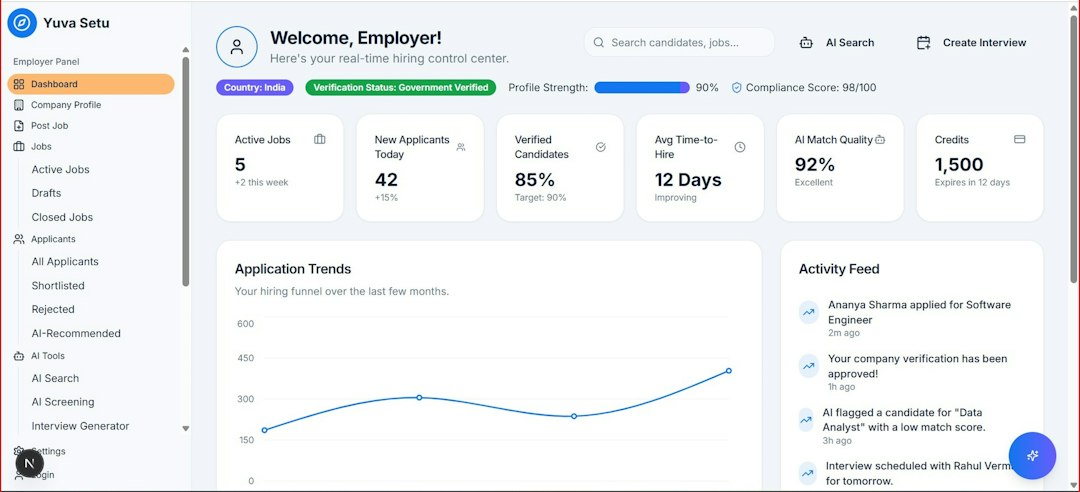
Base44 shines when you need something usable quickly. If your goal is to build a client portal, CRM, approval workflow, booking app, dashboard, or lightweight marketplace, it can feel almost too easy. You write what you want, refine the result, then adjust screens and logic.
This makes Base44 a good fit for:
- Internal tools for sales, HR, finance, or operations
- MVPs that need to prove an idea before hiring developers
- Simple AI features, such as text generation, summaries, or categorization
- Non-technical users who do not want to manage code
- Fast demos for investors, clients, or team planning
The catch is that speed often comes with walls. Once your app needs unusual logic, deep integrations, custom AI pipelines, or tricky permissions, you may start fighting the tool instead of building the product. That gets old fast.
Where Replit works best
Replit is a better choice when your AI app needs to behave in a specific way. You can build with Python, JavaScript, Node.js, Flask, FastAPI, Next.js, React, and other popular tools. You can connect to OpenAI, Anthropic, Google Gemini, Hugging Face, Pinecone, Supabase, PostgreSQL, Stripe, Twilio, and more.
That matters for AI-powered applications because many of them are not just “chatbots.” They need document search, user memory, role-based access, queues, file handling, model routing, logs, and cost controls. Replit gives you space to build those pieces properly.
Replit is especially useful for:
- AI agents that call tools or perform multi-step tasks
- Chat apps with memory, file uploads, or user accounts
- Data apps that process documents, spreadsheets, or scraped content
- API products that serve other apps or customers
- Developer-led MVPs that may become real products
It drives me crazy that some no-code AI builders make simple changes feel mysterious. Replit avoids most of that. If something breaks, you can open the file, read the error, and fix the actual problem.
AI features: simple prompts vs real engineering
Base44 makes AI app creation feel approachable. You can ask for an app, request changes, and get a usable interface. For basic AI features, this is enough. A recruiting team could create an app that summarizes resumes and ranks candidates by role fit. A real estate firm could generate property descriptions from form inputs.
Replit works better when AI is the core product. Say you are building a legal research assistant. You may need vector search, citation checks, file parsing, rate limits, prompt versioning, audit logs, and different model settings for each customer tier. Base44 may help you sketch this idea. Replit is where you can actually shape it.

Ease of use
Base44 wins for beginners. The learning curve is softer. You do not need to understand project folders, package managers, environment variables, or deployment logs. That is a huge plus if your team has ideas but no engineering support.
Replit is easier than a traditional local development setup, but it still asks more from you. You may need to understand basic code structure. You may need to debug. You may need to know what an API key is and why it should not be pasted into public code.
Still, Replit’s AI help lowers the barrier. You can ask it to explain errors, add features, write tests, or refactor messy code. For semi-technical founders, that can be the sweet spot.
Customization and ownership
This is where Replit pulls ahead. Code access matters. It gives you portability, flexibility, and a clearer path to scaling. If you build an app in Replit, you can usually move the code elsewhere later. You can hire developers to improve it. You can connect your own infrastructure.
Base44 is more controlled. That is not bad. In fact, it is part of why it feels simple. But if your app becomes business-critical, you may want more say over architecture, performance, security rules, and integrations.
If you are testing an idea, Base44 is appealing. If you are building something you may sell, scale, or maintain for years, Replit is safer.
Speed of building
Base44 is often faster for the first version. You describe the product, review the output, and keep adjusting. For a standard internal app, this can beat Replit by hours or even days.
Replit may take longer at first, but it pays off when the app gets more complex. Adding a custom API, background worker, admin panel, or AI evaluation script is much easier when you control the code.
A fair split looks like this:
- One-day prototype: Base44 usually wins
- Custom AI workflow: Replit usually wins
- Internal form-based app: Base44 is often enough
- Customer-facing SaaS: Replit is the better bet
- Learning to code with AI help: Replit is far better
Pricing and value
Pricing can change, so compare current plans before choosing. The better question is not “Which is cheaper?” It is “Which one becomes expensive later?”
Base44 can be cost-effective if it replaces weeks of design and development for a straightforward app. Replit can be more valuable if it prevents a rebuild six months later. Rebuilding is the hidden tax. Teams often ignore it until the prototype suddenly needs permissions, logs, billing, analytics, and AI cost tracking.

Which should you choose?
Pick Base44 if your top priority is speed, simplicity, and a polished first version. It is a strong choice for non-technical teams, quick experiments, and internal business tools.
Pick Replit if your app depends on custom AI behavior, real code, integrations, or long-term growth. It is the stronger Base44 alternative for developers, technical founders, and teams building products that need to evolve.
The practical answer is this: use Base44 to validate simple ideas fast, but use Replit when the app needs to become a real software product. If AI is just a feature, Base44 may be enough. If AI is the product, Replit gives you the control you will probably need.

