

A marketing agenda is more than a calendar of campaigns or a list of promotional tasks. It is a disciplined plan that connects business objectives, customer needs, team priorities, budgets, channels, and performance measures into one clear operating framework. When built properly, it helps marketing teams make better decisions, avoid scattered activity, and focus their energy on work that produces measurable results.
TLDR: A strong marketing agenda starts with clear business goals, a precise understanding of the customer, and a prioritized set of initiatives. It should define what will be done, why it matters, who owns it, and how success will be measured. The best agendas are realistic, data informed, and reviewed regularly so teams can adapt without losing strategic focus.
Contents
- 1 Start With Business Outcomes, Not Marketing Activity
- 2 Translate Goals Into Measurable Objectives
- 3 Build the Agenda Around the Customer
- 4 Prioritize Ruthlessly
- 5 Define Strategic Themes
- 6 Choose Channels Based on Purpose
- 7 Create Clear Ownership and Accountability
- 8 Balance Short Term Wins With Long Term Growth
- 9 Connect Budget to Priorities
- 10 Establish a Measurement Framework
- 11 Review and Adjust Regularly
- 12 Align Stakeholders Before Execution
- 13 Document the Agenda Clearly
- 14 Conclusion
Start With Business Outcomes, Not Marketing Activity
The most common mistake in marketing planning is beginning with tactics. Teams often start by asking, “What campaigns should we run?” or “Which channels should we use?” Those questions matter, but they should not come first. A results driven marketing agenda begins with business outcomes.
Before selecting channels or building campaigns, define what the organization needs marketing to help accomplish. Examples may include increasing qualified leads, improving customer retention, entering a new market, raising average order value, shortening the sales cycle, or strengthening brand credibility in a competitive category.
Each outcome should be specific enough to guide decisions. Instead of writing, “increase awareness,” define the intended result more clearly: “increase brand recognition among enterprise technology buyers in the healthcare sector over the next two quarters.” Clear outcomes prevent vague effort and make it easier to judge what belongs on the agenda and what does not.
Translate Goals Into Measurable Objectives
Once business outcomes are clear, translate them into measurable marketing objectives. A marketing agenda should not rely on ambition alone. It should contain targets that can be tracked, evaluated, and discussed with confidence.
Useful objectives often include three elements: a metric, a target, and a time frame. For example:
- Generate 1,200 marketing qualified leads in the next six months.
- Increase organic website traffic by 25 percent by the end of the year.
- Improve email nurture conversion rates from 3 percent to 5 percent within one quarter.
- Reduce customer acquisition cost by 15 percent while maintaining lead quality.
- Raise renewal engagement among existing customers through targeted lifecycle campaigns.
These objectives create accountability. They also make trade offs easier. If an initiative does not support a measurable objective, it should be reconsidered, refined, or removed.

Build the Agenda Around the Customer
A marketing agenda that ignores the customer will rarely drive meaningful results. Even the most polished campaign can fail if it is based on internal assumptions rather than customer reality. Effective planning requires a serious understanding of who the customer is, what they need, how they make decisions, and what barriers prevent them from acting.
Use customer research, sales conversations, support tickets, surveys, reviews, behavioral analytics, and market data to identify key audience segments. Then determine what each segment needs at different stages of the buying journey.
For example, early stage prospects may need educational content that explains the problem and establishes urgency. Mid stage prospects may need comparison guides, webinars, or case studies. Late stage buyers may need proof of return on investment, implementation details, pricing clarity, and executive level reassurance.
The agenda should reflect these differences. A single generic campaign will rarely serve every audience well. A serious marketing plan defines which customers matter most, what messages are relevant to them, and where those messages should appear.
Prioritize Ruthlessly
Most marketing teams have more ideas than capacity. Without prioritization, the agenda becomes crowded, reactive, and difficult to execute. The purpose of an agenda is not to include every possible activity. It is to identify the most important work and create the conditions for that work to succeed.
A useful prioritization process considers the following factors:
- Strategic relevance: Does the initiative directly support a business objective?
- Expected impact: Is the likely upside meaningful enough to justify the investment?
- Audience importance: Does it reach a high value customer segment?
- Resource requirement: Do you have the people, budget, tools, and time to execute well?
- Speed to value: How quickly can the initiative produce useful results or learning?
- Risk: What could prevent success, and can those risks be managed?
Prioritization also requires saying no. This can be difficult, especially when stakeholders request last minute campaigns or leadership wants immediate visibility in every channel. However, a strong agenda protects focus. It gives teams a credible reason to decline work that does not align with agreed priorities.
Define Strategic Themes
Strategic themes help organize the agenda into coherent areas of work. Rather than listing disconnected campaigns, group initiatives under themes that reflect the company’s priorities. This makes the agenda easier to understand, communicate, and manage.
Common strategic themes might include:
- Demand generation: Attracting and converting qualified prospects.
- Brand authority: Strengthening credibility, trust, and market recognition.
- Customer retention: Increasing engagement, loyalty, renewals, and repeat purchases.
- Sales enablement: Equipping sales teams with better content, insights, and tools.
- Market expansion: Supporting entry into new industries, regions, or customer segments.
- Product adoption: Encouraging customers to use more features or services.
These themes prevent the agenda from becoming a collection of isolated tasks. They also help executives see how marketing activity contributes to broader business performance.
Choose Channels Based on Purpose
Channels should be selected because they serve a clear purpose, not because they are popular or familiar. Social media, paid search, email, events, content marketing, partnerships, public relations, direct mail, webinars, and account based marketing can all be valuable, but only when matched to the right objective and audience.
For instance, paid search may be effective for capturing high intent demand, while thought leadership content may be better for building credibility in a complex market. Email may support nurturing and retention, while industry events may help establish trust with senior decision makers. The channel mix should reflect how customers actually discover, evaluate, and choose solutions.
A strong agenda explains why each channel is included. It also defines the role of each channel in the broader system. Marketing channels should not operate as separate silos. They should reinforce one another through consistent messaging, coordinated timing, and shared performance insights.
Create Clear Ownership and Accountability
Even a well designed agenda can fail if ownership is unclear. Every major initiative should have a responsible owner, supporting contributors, deadlines, budget requirements, and defined success measures. Ambiguity leads to delays, duplicated effort, and weak execution.
For each initiative, document the following:
- Objective: What result is this initiative intended to produce?
- Owner: Who is accountable for progress and outcomes?
- Stakeholders: Who needs to contribute, approve, or be informed?
- Timeline: What are the key milestones and deadlines?
- Budget: What financial resources are required?
- Metrics: How will performance be measured?
- Dependencies: What must happen before work can move forward?
This level of detail does not create bureaucracy; it creates discipline. It allows teams to execute with confidence and gives leaders a reliable view of progress.
Balance Short Term Wins With Long Term Growth
A productive marketing agenda should include both immediate performance initiatives and longer term brand building work. Focusing only on short term lead generation may produce quick results, but it can weaken future demand if the brand remains unknown or undifferentiated. Conversely, focusing only on brand visibility without conversion mechanisms can make marketing difficult to measure and defend.
The right balance depends on the business model, market maturity, budget, and growth stage. A startup may need fast demand creation to prove traction, while an established company may need to defend its position and deepen customer loyalty. In either case, the agenda should include a thoughtful mix of activity.
Short term initiatives may include promotional campaigns, paid media, conversion rate optimization, lead nurturing, or sales enablement. Long term initiatives may include search engine authority, brand positioning, customer advocacy, original research, community building, or reputation development.
Connect Budget to Priorities
Budget allocation is one of the clearest signals of strategic intent. If the agenda says that customer retention is a priority but nearly all spending goes to new acquisition, the plan is misaligned. A serious marketing agenda connects budget decisions directly to objectives.
Break the budget into categories such as media spend, content production, technology, events, agencies, research, design, and testing. Then evaluate whether each category supports the most important goals. Budget should not be distributed by habit. It should be actively matched to expected impact.
It is also wise to reserve a portion of the budget for experimentation. Markets change, customer behavior shifts, and new opportunities appear. A modest test budget allows the team to learn without disrupting core commitments.
Establish a Measurement Framework
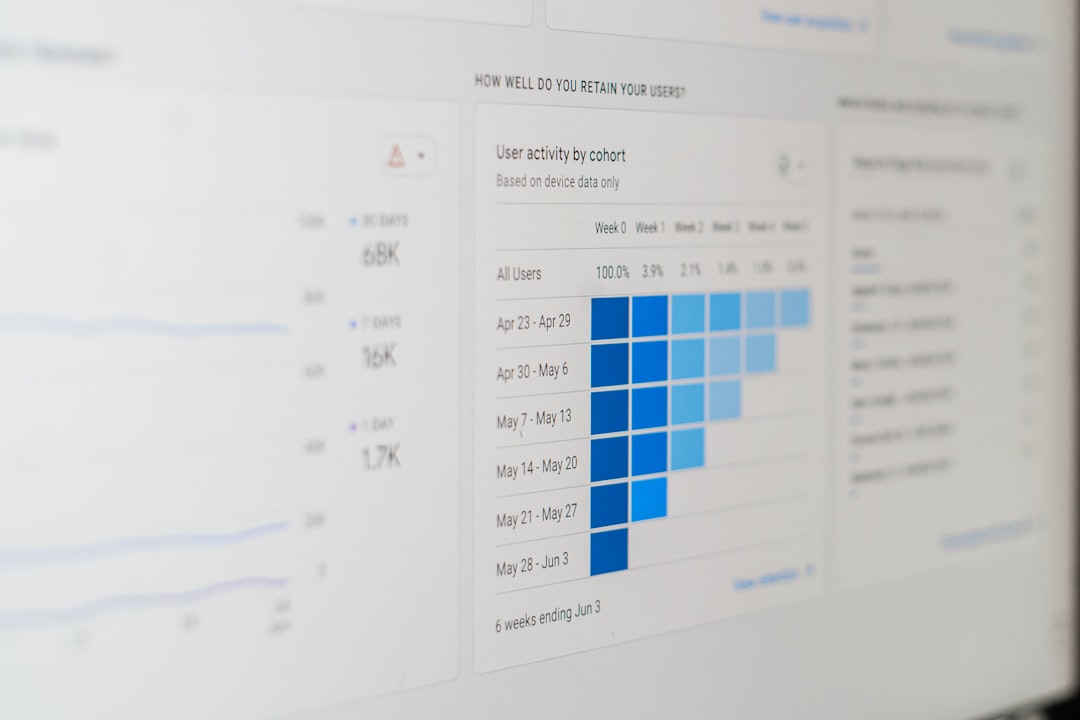
Measurement is essential, but not all metrics carry equal weight. A marketing agenda should distinguish between activity metrics, performance metrics, and business impact metrics.
- Activity metrics show what the team produced, such as campaigns launched, emails sent, or content published.
- Performance metrics show how audiences responded, such as click through rates, conversion rates, cost per lead, engagement, and traffic quality.
- Business impact metrics show contribution to revenue, retention, pipeline, market share, profitability, or customer lifetime value.
Activity metrics can be useful for managing execution, but they should not be mistaken for results. The most valuable agenda connects marketing performance to business impact wherever possible. This may require collaboration with sales, finance, customer success, and operations to ensure data is accurate and definitions are consistent.
Review and Adjust Regularly
A marketing agenda should be stable enough to provide direction but flexible enough to respond to evidence. Markets do not stand still. Competitors change their positioning, customer expectations evolve, budgets shift, and campaigns produce unexpected results. Regular review keeps the agenda relevant.
Monthly reviews can focus on execution, campaign performance, and immediate adjustments. Quarterly reviews should examine broader progress against objectives, budget allocation, strategic priorities, and lessons learned. Annual planning should set the larger direction, but the agenda should not be locked for twelve months without meaningful evaluation.
During each review, ask serious questions:
- Which initiatives are producing measurable progress?
- Where are we investing effort without sufficient return?
- What customer insights have changed our understanding?
- Are sales and marketing aligned on lead quality and pipeline contribution?
- Do we need to reallocate budget or resources?
- What should we stop, start, or improve?
This process turns the agenda into a living management tool rather than a static document.
Align Stakeholders Before Execution
Marketing agendas often fail because alignment happens too late. Sales, product, finance, customer success, and executive leadership may all have different expectations. If those expectations are not addressed early, the team may face conflicting requests after execution has already begun.
Before finalizing the agenda, share the proposed goals, priorities, major initiatives, budget assumptions, and measurement framework with key stakeholders. Invite constructive challenge. Clarify trade offs. Confirm what success means. This does not mean every stakeholder should control the agenda, but it does mean the plan should be understood and supported by the people affected by it.
Strong alignment also improves execution. Sales can prepare for campaign generated leads. Product teams can support launches with accurate messaging. Customer success can reinforce retention initiatives. Finance can help evaluate return on investment. The agenda becomes stronger when it is connected to the operating reality of the business.
Document the Agenda Clearly
A marketing agenda should be written in a format that is easy to use. If the document is too long, vague, or complicated, people will ignore it. The best agendas are structured, practical, and accessible.
At minimum, include:
- Business goals and marketing objectives
- Target audiences and customer insights
- Strategic themes
- Priority initiatives
- Channel strategy
- Budget allocation
- Timeline and milestones
- Owners and responsibilities
- Key performance indicators
- Review schedule
The format can be a planning document, spreadsheet, dashboard, presentation, or project management board. The format matters less than clarity and consistent use.
Conclusion
Building a marketing agenda that drives results requires discipline, evidence, and focus. It begins with business goals, translates them into measurable objectives, and organizes marketing activity around the customer. It prioritizes the work that matters most, assigns clear ownership, connects budget to strategy, and measures performance honestly.
A serious marketing agenda does not promise results through activity alone. It creates a practical system for making better choices, executing consistently, learning from evidence, and improving over time. When marketing teams operate from that kind of agenda, they are better positioned to earn trust, use resources wisely, and contribute meaningfully to business growth.

